Criticisms
A Trip to “Invisible Space”
2012.08.13
Yoo, Jae-Kil
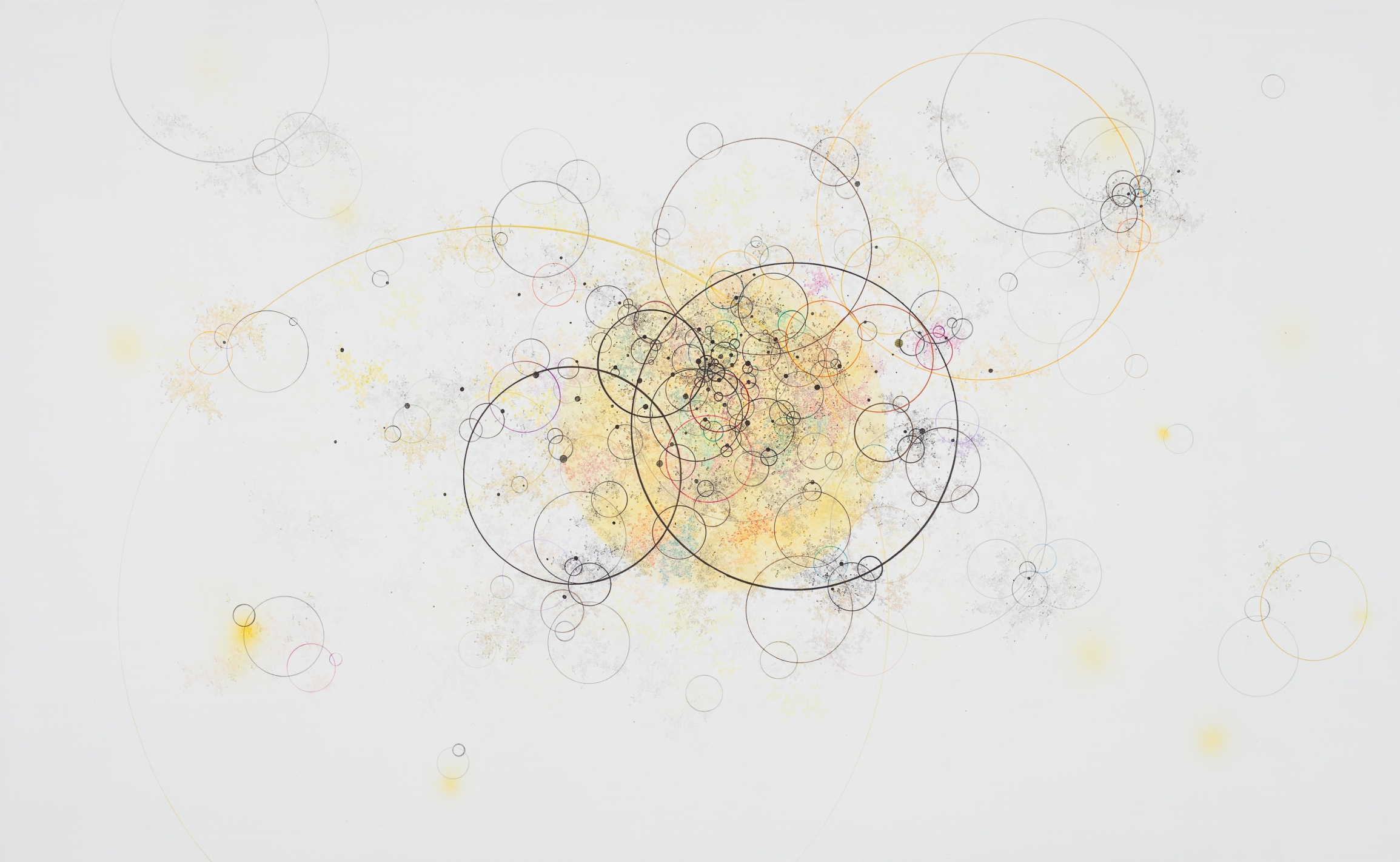
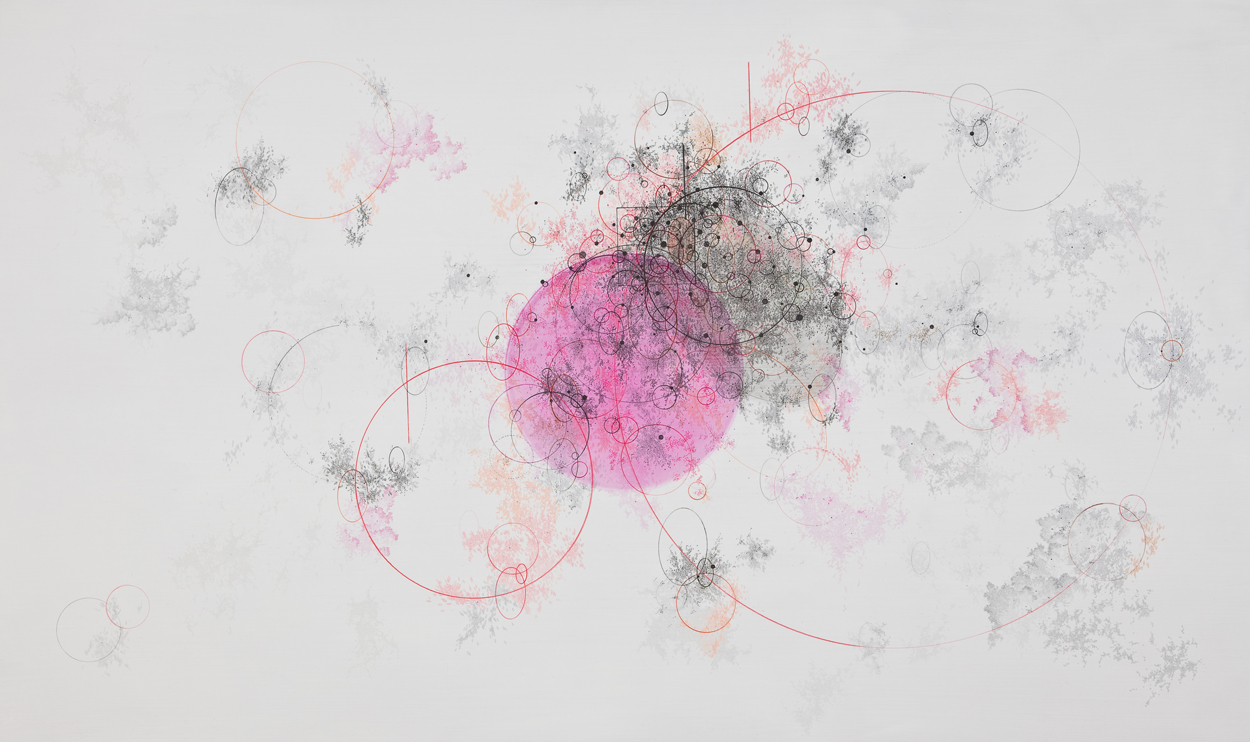
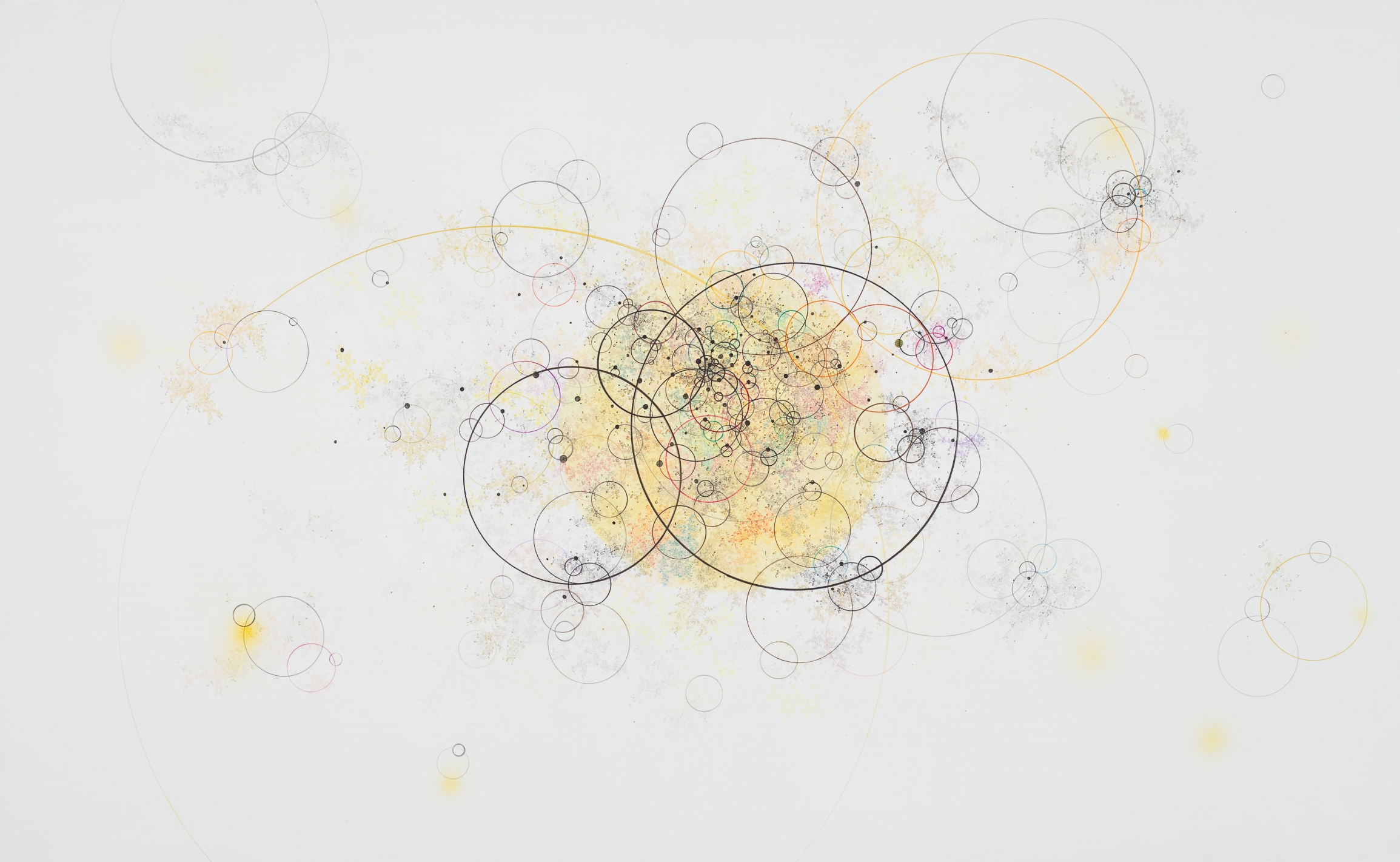
Untitled-12014, 2012, Mixed media on canvas, 80 x 130 cm ©Artist
Lee Kang Wook draws a picture on a canvas with a pencil. On a white background, the pencil drawing becomes a complex picture. Unknown scenery resembling cellular tissue or planetary orbit is drawn with small dots and lines. Lee said that this is a microscopic and macroscopic scenery that cannot be seen with the eye. An imaginary world resembling cell-dividing organisms seems to be produced through automatic methods. This is where the journey begins in “Invisible Space” where consciousness and unconsciousness are pictured without boundaries.
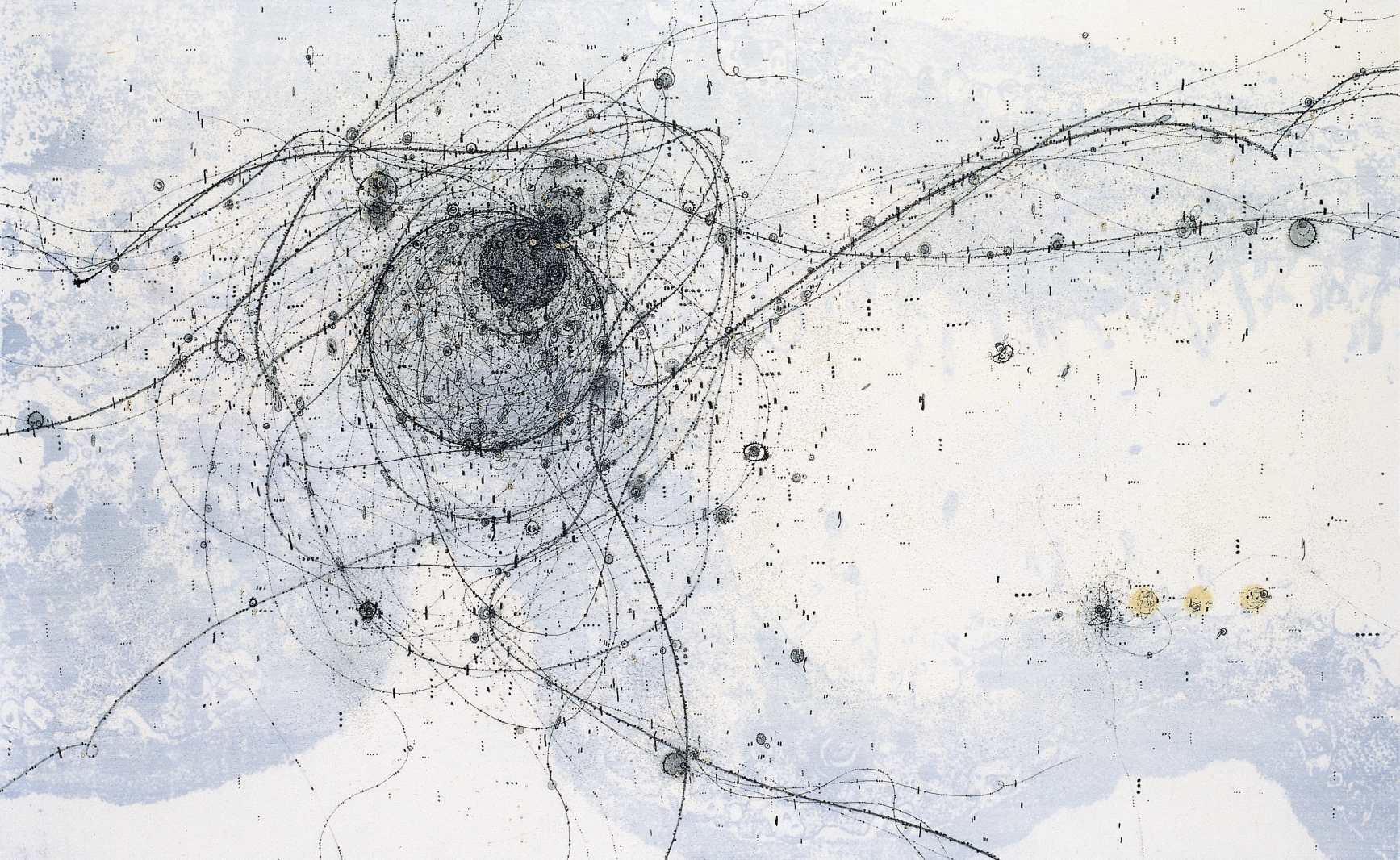
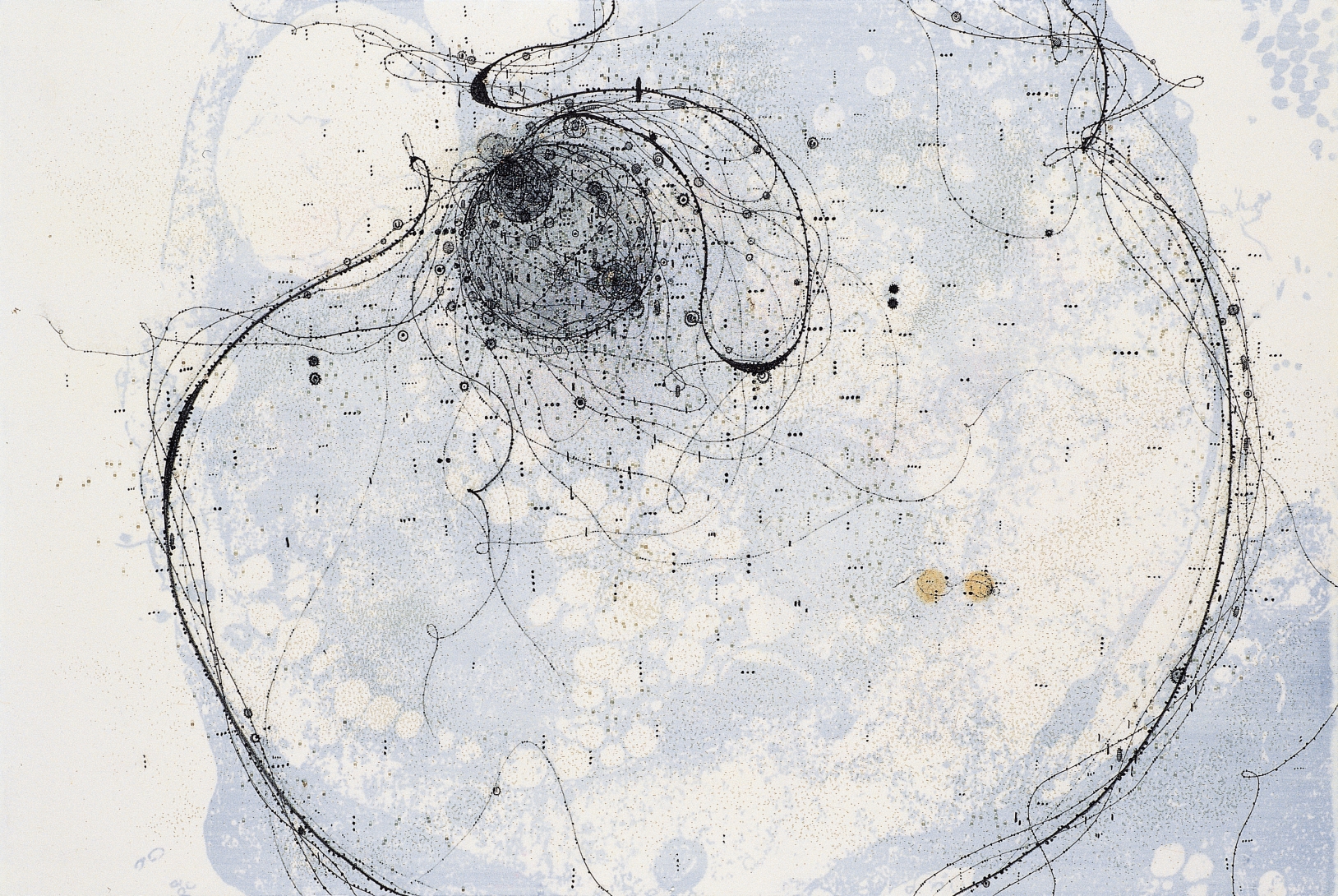
‘Invisible Space’ has been produced as a series and is different from his dual structures from the late 1990s in that it is more segmentalised. The first space shows a magnified image of a cell as the basis of the canvas. The partial image of the cell is microscopic. There is also a round image of a cell which is blurred and out of focus. The faded blue image in the first space is the image of the past. This only shows a vaguely cellular form as if it is a memory from the past. This becomes a foundation to support the extinction and birth of a cell as to confirm the existence of something.
A major part of the second space is taken up with a pencil drawing. If the first space is a form of the past, the second space shows an image of the present. Here, the view from an airplane is shown, with an arrow representing a spaceship revolving around the earth. The pencil line draws the invisible space of the present. The picture is filled with rivers, streetlights at night, or imaginary drawn lines in an endless track. Overlapping dots and curves that are drawn from left to right and from top to bottom do not depict specific objects. The repeated work of lines that do not picture specific objects implies microscopic and macroscopic worlds. Invisible Space forms a journey from the past to the present.
The third space is a fantastic world illuminated by halogen lamps, rather than natural light or everyday light bulbs. This is an unknown feature of the future which is shown through halogen lights to make visible the space of the future. The halogen lights create splendid rainbow colours and, inducing fantastic feelings in peoples’ hearts. Apart from this, this kind of effect can also be expanded to environmental art which can create a fresh environment with eventful colour changes and which can enrich people's imaginations. The third surface in “Invisible Space” is where galaxies in the sky take the journey into a mysterious space.
As discussed above, the three complex structures in this recent work use an automatic method based on the artist’s delicate sensation (la sensation). The pencil drawing which draws both microscopic and macroscopic, fantasy and imaginary worlds, is based on sensation. His sensation appears very soft but creates “Invisible Space” with a structure of the past, the present, and the future. This unique three-spaced structure is made of delicate and sensational lines. These structures (or featuring works in the microscopic and macroscopic world) resemble the artist and in the midst of change in a complex space, we face artworks that resemble ourselves.
Microscopic and macroscopic sceneries on the screen, fine and long curves and dots similar to sesame seeds, it is these small formative elements which have a characteristic of coincidence and amusement. Moreover, among the chaos, formative order makes a beautiful flow of lines and lights. This is the beginning of a long journey to find an ego in the space of the past, the present, and the future through the painting's aesthetic study. We reflect ourselves in the place where we find our egos and discover "invisible power". In Lee Kang Wook’s microscopic and macroscopic “Invisible Space” we find “L'invitation au voyage” that Charles Baudelaire had dreamed of.
“There, everything is only about order, beauty, magnificence, and pleasure. (Là, tout n'est qu'ordre et beauté, luxe, calme et volupté.)”
Related Works
Writings